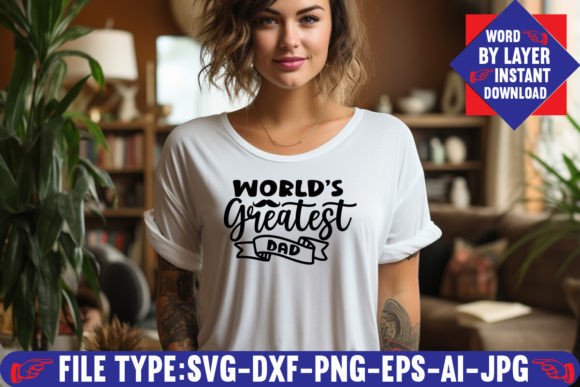
Why the World s Greatest Dad Svg Design Can Go Wrong and How to Get It Right Every Time
Finding the perfect design for a father's day gift, a birthday project, or just a heartfelt surprise often leads crafters to the World s Greatest Dad Svg Design. It is a popular choice because it is versatile, meaningful, and works with cutting machines like Cricut and Silhouette. However, many people download a file, assume it will work perfectly, and end up frustrated when the cut is off, the layers do not align, or the final product looks nothing like the preview. Understanding what you are actually getting and how to handle the files correctly makes all the difference between a project you are proud of and one you have to scrap.
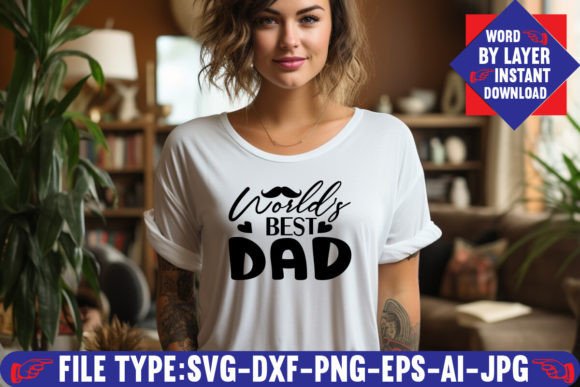
The typical download includes a single .zip folder containing multiple file formats: an Ai file for Adobe Illustrator, an SVG file described as a word-by-layer cut file, a high-resolution PNG with a transparent background, an EPS editable vector file, a DXF file, and a JPEG. This sounds generous, and it is, but only if you know how to use each format properly. The most common mistake is treating every file as interchangeable or assuming the PNG is suitable for cutting. It is not. The PNG is for previewing or printing, while the SVG and DXF are what your machine actually reads. Mixing them up leads to wasted material and time.
Overlooking the Layer Structure in Word by Layer Designs
The phrase "word by layer" is not just marketing language. It describes how the design is built. Instead of one solid shape, each word or letter group sits on its own layer. This allows you to cut each section in a different color vinyl or apply them separately for a dimensional look. A frequent mistake people make is importing the SVG into their design software and then trying to weld everything into a single piece. That defeats the purpose. You lose the ability to stagger colors or create a shadow effect behind the text.
If you want a single-color design, you can certainly merge the layers, but you should do that intentionally. The better approach is to open the file, look at the layer panel, and decide how you want to arrange the colors before you cut. For example, you might cut "World's" in gold, "Greatest" in black, and "Dad" in a deep navy. Without checking the layers first, you might accidentally cut everything in one color and wonder why the design looks flat.
Another practical tip: rename your layers in your software before sending to the cutting mat. Many SVG files come with generic layer names like "Layer 1" or "Path 3472." Renaming them to "Gold Letters" or "Shadow Layer" helps you avoid confusion when you have multiple mats to weed and transfer.
Ignoring the Difference Between Cut Files and Print Files
One of the most overlooked details is that the PNG file, even though it is high resolution with a transparent background, is not a cut file. It is a raster image. If you load a PNG into Cricut Design Space or Silhouette Studio and try to cut it, the software will either refuse or give you a poor outline that does not match the original design. The SVG, DXF, and AI formats are vector-based, meaning they contain mathematical paths that the machine can follow precisely.
I have seen beginners purchase a World s Greatest Dad Svg Design, open the JPEG, trace it manually, and then complain that the cut is jagged. That is unnecessary work. The right file is already in the folder. You just need to select the SVG file if you are using Cricut or most Android or PC setups. For Silhouette, the DXF or SVG both work well, though some users prefer DXF for older software versions. If you are on a Mac and using Affinity Designer or Illustrator, the AI or EPS files give you the most editing flexibility.
A good habit is to always unzip the folder and sort files by type before importing. Keep the SVG and DXF in a dedicated "cut files" subfolder and the PNG and JPEG in a "previews" subfolder. This keeps your workspace organized and reduces the chance of grabbing the wrong file when you are in a hurry.
Assuming All SVG Files Are the Same Quality
Not all SVG files are created equal, even within the same download. The World s Greatest Dad Svg Design you receive may have been optimized for one machine but not another. Some SVG files contain extra nodes, overlapping paths, or hidden clipping masks that cause the cutting machine to stall or cut in the wrong order. This is especially common when the design was originally created in Adobe Illustrator and exported without cleaning up the code.
Before you cut, take a moment to preview the design in your software. Zoom in on the letters. Look for stray points or tiny gaps between the cut lines. If you see anything suspicious, use the contour or weld tool to simplify the paths. A quick check can save you from wasting a sheet of adhesive vinyl or heat transfer material.
If you find that the SVG file has issues, try the EPS or DXF version instead. Sometimes one format will export cleaner than another, even if they come from the same source. Keep all the files in your download because a backup format might work better on your specific setup.
Forgetting to Account for Weeding and Transfer Tape
The design itself might look flawless on screen, but real-world crafting involves weeding, transfer tape, and alignment. A common oversight is choosing a font or layout that has very thin strokes or tight spaces inside letters like "a," "e," or "d." When you weed these areas, the vinyl can tear or lift away from the backing. The World s Greatest Dad Svg Design often has decorative elements like stars, banners, or cursive scripts that look beautiful but are tricky to weed if the design is too delicate.
If you are new to vinyl crafting, look at the design before you buy or download. Check the thickness of the letter strokes. A bold, blocky font is much easier to weed than a thin script. If you already have a delicate design, apply a piece of transfer tape over the entire cut before removing the excess vinyl. This holds the small pieces in place while you weed. Another trick is to use a weeding tool with a fine tip and work slowly from the center outward.
Also, consider the size of the final project. Scaling a design down too much makes the thin parts even thinner and harder to handle. If you are making a card or a small tag, choose a simplified version of the design or increase the physical size so the details have room to breathe.
Misunderstanding the Digital Download Only Policy
The listing clearly states "digital download only no physical product." Yet many people expect a mailed item or assume the file includes a printed template. This misunderstanding leads to negative reviews that could have been avoided. The download contains vector and raster files that you use with your own equipment and materials. You are responsible for having the right machine, software, and substrate. If you do not own a cutting machine, these files are still useful for print projects like posters, mugs, or t-shirts using a print-on-demand service.
Before purchasing, check the compatibility. The files work with Cricut, Silhouette, Inkscape, Adobe Photoshop, and Adobe Illustrator. But if you use a different program like ScanNCut or Sure Cuts A Lot, verify that the format is supported. Most modern software accepts SVG, but double-check if your version needs an older file type. The inclusion of DXF and EPS gives you flexibility, but you still need to know where to import them.
A practical step is to open the zip file on your computer before you start any project. Do not wait until you are standing at your cutting machine. Preview the files, make sure they open correctly, and check that the layers are as expected. If something is wrong, contact the seller while you still have time to resolve it, not after you have already started cutting.
Choosing the Wrong Material for the Design
The World s Greatest Dad Svg Design can be cut in almost any material your machine handles: permanent vinyl, removable vinyl, heat transfer vinyl, cardstock, or even leather. However, not every design works on every material. Intricate designs with many small pieces are better suited for adhesive vinyl than for heat transfer vinyl, especially if the HTV has a thick carrier sheet that makes weeding difficult.
If you plan to put the design on a fabric item like a t-shirt or a tote bag, use heat transfer vinyl and mirror the design before cutting. Many SVG files come with a note about mirroring, but not all do. Make it a habit to flip the design horizontally before cutting HTV. For adhesive vinyl, do not mirror it unless you are applying it to the inside of a window.
Another material mistake is using cheap vinyl that does not stick well or dulls your blade. The design is only as good as the material you cut it from. Invest in quality vinyl from a reputable brand, especially for a gift that says "World's Greatest Dad." You want it to last, not peel off after a few washes.
Neglecting to Test Before the Final Project
Even experienced crafters sometimes skip the test cut. They load the SVG, hit go, and hope for the best. With a design that has multiple layers and text, a test cut is essential. Cut a small section of the design on scrap vinyl or cardstock first. Check the blade pressure, the cut speed, and whether the design weeded cleanly. Adjust the settings if needed.
If you are using a layered design, test each color separately on scraps. This lets you confirm that the registration and alignment are correct before you commit to the final substrate. It takes an extra ten minutes, but it saves you from wasting materials and getting frustrated.
Testing also helps you catch issues like missing font files. Some SVG designs rely on system fonts that might not be installed on your computer. If the text looks different in your software than in the preview, you may need to install the font or outline the text in the vector file before cutting.
Getting the Most from Your Download
The World s Greatest Dad Svg Design is more than just a file to cut once and forget. Because it comes in multiple formats, you can repurpose it across different projects. Use the SVG for vinyl decals on a water bottle, the PNG for a custom coffee mug via a print service, and the EPS for a large poster or banner. The key is treating each format as a tool for a specific job rather than assuming they all do the same thing.
If you are a small business owner selling personalized gifts, this design can become a staple in your product line. Offer it in different color combinations or pair it with other phrases. Because you have the vector files, you can resize the design without losing quality, which is crucial when going from a small keychain to a large wall decal.
For hobbyists and beginners, take the time to learn the basics of your design software. Knowing how to ungroup, weld, slice, and contour will unlock the full potential of any SVG you download. A surprising number of crafting problems trace back to not knowing how to edit the file rather than the file itself being bad.
Finally, store the zip file in a safe place. Digital downloads can be lost if you clear your downloads folder or switch computers. Back up your files to a cloud drive or an external hard drive. That way, if you want to make another "World's Greatest Dad" project next year, you do not have to search for the download link or repurchase the design.
By understanding what you are getting, how to choose the right format, and how to avoid the common pitfalls around layering, weeding, and material selection, you turn a simple SVG into a professional-looking gift that genuinely impresses. The design itself holds the sentiment. Your skill and attention make it real.