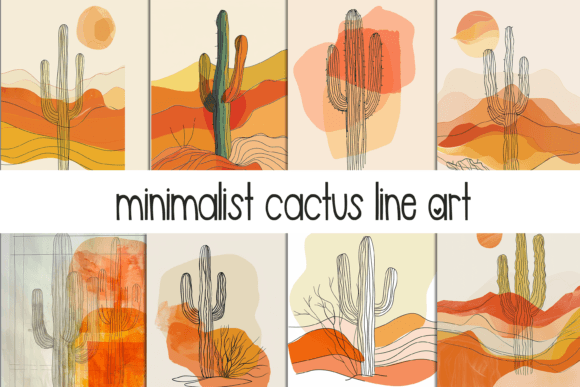
Minimalist Cactus Line Art Backgrounds and Wallpapers
Clean lines, subtle natural forms, and a calm visual rhythm—minimalist cactus line art has quietly become a favorite among designers, content creators, and business owners who want their digital projects to feel polished without being loud. Unlike busy patterns or overly detailed illustrations, these backgrounds rely on simple, deliberate strokes to create a sense of balance and openness. Whether you are building a website, preparing a social media campaign, or designing printed materials, the right background can set the tone before a single word is read. This article explores what minimalist cactus line art backgrounds offer, who benefits most from using them, and how to get the best results from a high‑resolution set designed for both print and screen.
What Makes Minimalist Cactus Line Art Distinctive
At its core, minimalist cactus line art strips away unnecessary detail, leaving only the essential contours of cactus forms—smooth curves, sharp spines, and organic shapes. When applied to a background, these elements create a soft focal point that complements text, images, and other design components without competing for attention. The 16 HD images in this collection are rendered in PNG format at 3600 px × 3600 px, with a resolution of 300 DPI. That means each file holds enough detail for large‑format prints—posters, banners, or even fabric—while still looking crisp on high‑definition screens. Because the backgrounds are not transparent, they work as complete surfaces rather than overlay elements. This makes them ideal for projects where you want a ready‑to‑use backdrop that already feels complete.
The colorful designs in this set break away from the monochrome often associated with line art. By introducing subtle hues—soft pastels, warm terracottas, or muted greens—the backgrounds maintain their minimalist character while adding a gentle energy. This balance is difficult to achieve with generic stock imagery, where colors often feel either too flat or overly saturated. Here, the palette stays restrained enough to keep the attention on your content, yet vibrant enough to prevent a dull look.
Who Benefits Most from These Digital Backgrounds
Different creators have different needs, and this collection addresses several common scenarios.
Graphic Designers and Brand Creators
When you are building a brand identity, every visual element must align with the company’s voice. Minimalist cactus line art backgrounds work well for brands that want to communicate calmness, growth, or a connection to nature—think wellness studios, organic product lines, or eco‑friendly companies. The high resolution (3600 px) and 300 DPI give you flexibility to resize without losing quality, whether you need a full‑page brochure background or a small social media tile. The 16 variations let you maintain a consistent theme across multiple pieces while avoiding repetitive monotony.
Photographers Seeking Backdrop Alternatives
Studio photography often benefits from interesting backgrounds that don’t distract from the subject. A cactus line art pattern can add texture and visual interest to product shots, portrait sessions, or flat lays. Because the backgrounds are colorful but not busy, they work particularly well for lifestyle photography where the goal is to feel approachable and natural. The large file size (10–20 MB per design) ensures that even when you zoom in or crop, the lines remain sharp—a practical advantage when you need to deliver high‑resolution images to clients.
Bloggers, Educators, and Content Creators
For anyone producing digital content, a clean background can make the difference between a post that looks professional and one that seems thrown together. Blog headers, YouTube thumbnails, presentation slides, and course materials all benefit from a unified visual style. The minimalist cactus line art backgrounds are particularly useful for educators who want to create calm, distraction‑free slides, or for lifestyle bloggers who want a consistent aesthetic across their site. Since the PNG format preserves the exact colors and crisp line work, you can upload directly without worrying about compression artifacts.
Small Business Owners and Entrepreneurs
Limited time and budget often mean you cannot hire a designer for every project. Having a versatile set of high‑quality backgrounds allows you to produce professional materials quickly. Email newsletters, product catalogs, social media ads, and even simple business cards can be elevated by starting with a polished background. The 16 designs give you enough variety to avoid repetition across different campaigns while staying within a cohesive visual family.
Practical Considerations: Resolution, Format, and File Size
Understanding the technical specifications helps you avoid surprises during a project. The 3600 px × 3600 px dimension and 300 DPI mean each image can be printed at 12 inches × 12 inches at full quality, or scaled down for digital use—where you might even reduce the physical size for faster loading times. The large file size (10–20 MB per design) ensures no quality loss, but you may want to compress copies for web use if your platform has strict file size limits. For example, a website hero image can be saved as a smaller JPG derivative while keeping the original PNG for print or high‑resolution display.
One limitation worth noting is that the backgrounds are not transparent. If your workflow requires layered compositions—for instance, placing text over an image and needing the background to cut out—you might need to use a different format or create a mask. However, for most uses as a standalone backdrop or a base layer, the solid background simplifies the design process because you do not need to worry about transparency blending issues.
How to Integrate These Backgrounds into Your Work
The practical value of any asset lies in how easily it fits into existing processes. Here are a few ways to apply minimalist cactus line art backgrounds effectively:
- Website and landing pages: Use a full‑size background image for your hero section, then overlay a semi‑transparent color or gradient to ensure text readability. Because the cactus lines are already minimalist, adding a subtle tint will not ruin the visual.
- Social media templates: Create reusable Instagram story backgrounds or Pinterest pins. The 3600 px width gives you room to crop to square, vertical, or horizontal formats while keeping the composition centered.
- Print materials: For flyers, postcards, or small posters, the 300 DPI ensures that line details remain sharp. Test a sample print before full production to confirm color accuracy, as monitor and printer profiles can differ.
- Presentation decks: Set the background for slide masters in PowerPoint, Keynote, or Google Slides. The minimalist style keeps the background from competing with charts, bullet points, or images.
- Digital scrapbooking or planner pages: Hobbyists can use these backgrounds as paper for digital journaling or scrapbooking projects. The colorful designs add personality without overwhelming notes or stickers.
When to Compare Options
While this collection works well for a wide range of scenarios, there are situations where you might want to explore alternatives. If your project requires a very light file size for email attachments or ultra‑fast web loading, you could create compressed versions yourself or look for lower‑resolution sets. Similarly, if you need a completely neutral background that does not draw any attention, solid color or subtle texture might be more appropriate. The cactus theme carries a particular aesthetic—natural, modern, slightly playful—so it may not fit corporate environments that demand strict professionalism without visual character. In such cases, you might combine these backgrounds with other neutral elements or use them only for internal or social channels where the tone is more relaxed.
Recommendations for Long‑Term Use
To get the most out of the 16 HD images, consider organizing them by color palette or mood. Keep a folder of the designs you use most frequently, and archive the rest for future projects. Because the backgrounds are not tied to a specific season or holiday trend, they remain useful for years—a wise investment for anyone who regularly produces visual content. Additionally, because each file is 10–20 MB, store them on a reliable cloud or external drive to avoid slowing down your working device.
For creators who work with teams, the simplicity of the backgrounds makes collaboration easier. You can share a single image with a copywriter, web developer, or print vendor, confident that the design will translate consistently across different software and hardware. And because the line art is not overly intricate, even team members who are not designers can quickly understand how to place content on top of the background without misalignment.
Final Thoughts on Minimalist Cactus Line Art
Minimalist cactus line art backgrounds occupy a sweet spot between beauty and function. They provide a distinct visual foundation without demanding attention, making them particularly valuable for professionals who need to communicate clearly and elegantly. The 16‑image set, with its large resolution and rich color, gives you enough range to cover diverse projects—from photography backdrops to brand assets to educational materials. While no single asset works for every situation, this collection addresses many common needs with quality and consistency. If your work involves any kind of visual communication, having a curated set of minimalist backgrounds on hand can save time, reduce decision fatigue, and help you produce results that look intentional without feeling overworked. Explore the designs, test them in your own workflow, and see how a simple line can do more than you expect.