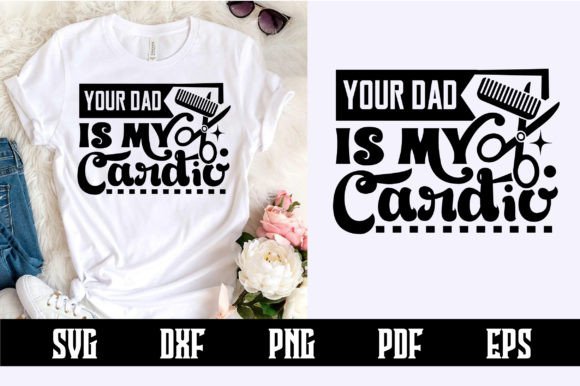
Your Dad is My Cardio SVG Design: A Practical Guide to Workflow, Customization, and Real-World Use
If you browse craft marketplaces or scroll through social media feeds filled with handmade goods, you have likely encountered the Your Dad is My Cardio SVG Design. At first glance, it is a clever, witty piece of typography that resonates with anyone who values family, humor, and a touch of fitness irony. But for creators, small business owners, and hobbyists, this design represents something far more practical: a versatile digital asset that can streamline production, simplify project planning, and expand product lines with minimal effort.
This article walks through how to integrate the Your Dad is My Cardio SVG Design into your creative workflow, from file preparation and software compatibility to production scaling and quality control. Whether you are a seasoned seller on Etsy, a hobbyist setting up a home studio, or a blogger looking for unique merch ideas, understanding how to work with layered SVG files will save you time and help you deliver consistent results.
Understanding the File Package: More Than Just a SVG
When you purchase a digital download like the one described in Welcome to my Store, you are not simply buying a single image. You are receiving a bundle of five professionally formatted files, each designed for a specific stage in your production pipeline. The package includes an SVG file (word-by-layer, Cricut compatible), an EPS file (fully editable vector), a PNG file (300 DPI, transparent background), a DXF file (AutoCAD interchange), and a PDF file (Adobe Illustrator source).
Understanding what each format does and when to use it is the first step toward a smooth workflow. The SVG is your primary cutting file for machines like Cricut or Silhouette. The EPS and PDF are your editable master copies, allowing you to resize, recolor, or rearrange elements before export. The PNG is your ready-to-print raster image for mockups, previews, or print-on-demand listings. The DXF is a fallback for certain CAD-based cutting systems or older software versions.
Having all five formats in one zip folder means you can move from concept to finished product without converting files or troubleshooting compatibility issues. This is especially valuable if you serve multiple sales channels or produce goods for different substrates.
Where the Your Dad is My Cardio SVG Design Fits in a Real Workflow
Creative projects rarely follow a straight line. You might start with an idea, move to design, then to production, then to marketing, and back to refinement. The Your Dad is My Cardio SVG Design can be inserted at several points in this loop, depending on your role and goals.
Before Production: Planning and Asset Preparation
If you are a small business owner or a maker, you likely maintain a library of SVG files organized by theme, sentiment, or season. Before you cut a single piece of vinyl or print a single transfer, you need to review your design files for layer separation, sizing, and cut settings. The word-by-layer structure of this SVG means each line of text is on its own layer, which gives you granular control during the weeding and assembly phases.
For example, the phrase Your Dad is My Cardio can be separated into individual color layers, allowing you to use different vinyl colors for each word or element. This layered approach is ideal for multi-color projects without resorting to print-then-cut methods. In your pre-production checklist, you might load the SVG into your design software, check layer names, assign cut lines, and run a test cut on scrap material. This step ensures that when you move to final production, everything lines up correctly and your material usage is optimized.
During Production: Cutting, Weeding, and Assembly
Once your file is prepped, the SVG moves into your cutting software. Because the file is already layered, you can assign different cut settings to different parts of the design if needed. For instance, small text details might require a finer blade pressure or a slower speed. The EPS or PDF file can be used as a reference if you need to verify the original layer order or color intent.
Weeding is where the word-by-layer structure really shines. Instead of trying to remove excess vinyl from a single monolithic design, you weed each color layer separately. This reduces errors, speeds up the process, and makes it feasible to produce multiple units in a single session. After weeding, you transfer each layer using standard registration techniques. If you are producing mugs or signs, the same layered approach applies to heat transfer vinyl or adhesive vinyl.
The PNG file with a transparent background is useful during assembly as a visual guide. You can keep it open on a tablet or phone screen to verify placement before applying the transfer tape. This simple step reduces misalignment and material waste.
After Production: Quality Control, Packaging, and Listing
After your physical product is assembled, the digital files continue to serve you. The PNG file is ideal for creating listing photos or social media posts. Because it is 300 DPI with a transparent background, you can drop it onto a mockup of a t-shirt, mug, or sign without spending time on background removal. This speeds up your listing process and ensures consistent branding across your storefront.
If you offer customization, you can use the EPS or PDF file as a starting point. Open it in Adobe Illustrator or Affinity Designer, edit the text or colors to match a customer request, and export a new SVG for production. Having a well-structured source file reduces turnaround time for custom orders and helps you maintain quality standards.
Compatibility and Tool Integration
The Your Dad is My Cardio SVG Design is explicitly compatible with Cricut machines, but its utility extends far beyond that single platform. The SVG format works with Silhouette Studio, Brother ScanNCut, and most laser engravers that accept vector input. The EPS file can be opened in Adobe Illustrator, CorelDRAW, Affinity Designer, Inkscape, and many other vector editors. The DXF format is useful for users who work with AutoCAD or certain CNC routing tools.
If you use print-on-demand services like Printful, Printify, or CustomCat, the PNG file is your best friend. Upload the transparent PNG to the design tool of your chosen POD platform, adjust the size and placement, and you have a ready-to-list product. Because the file is high resolution, it prints cleanly on apparel, mugs, and wall art. The layered SVG can also be used if the POD service supports vector uploads, though PNG is more universally accepted.
For digital planners or content creators, the SVG and PNG files can be used in Canva, Procreate, or Photoshop to create digital stickers, journal covers, or social media templates. The transparent background allows you to layer the design over photos, patterns, or solid backgrounds without fuss.
Practical Implementation Tips for Long-Term Use
Building a library of SVG designs is only useful if you can find and use them efficiently. Here are a few workflow practices that will help you get the most out of your Your Dad is My Cardio SVG Design and similar files over time.
- Organize by theme and format. Keep your SVG, EPS, PNG, DXF, and PDF files together in a clearly named folder. Use a consistent naming convention that includes the design title and the year you purchased it. This makes it easy to locate the source file when you need to create a variation.
- Maintain a master copy. Never edit the original EPS or PDF directly. Instead, duplicate it before making changes. This preserves your clean master for future projects and prevents accidental corruption.
- Test cut before bulk production. Even if you have used the file before, material variations (vinyl type, thickness, temperature) can affect cut quality. Run a single test cut at the start of each session. Adjust blade depth, pressure, and speed as needed.
- Use color coding consistently. If the SVG layers are named by color, keep that naming convention in your software. This helps you quickly assign cut colors and avoids confusion during multi-layer assembly.
- Create a mockup template. Take your PNG file and build a set of product mockups (t-shirt, mug, sign) in Canva or Photoshop. Save these as templates. When you list a new product, you simply drop the design into the template and export your images. This reduces listing time from hours to minutes.
- Back up your files. Digital downloads can be lost if your computer crashes or your account is compromised. Keep a backup on an external drive or a cloud storage service. This is especially important for designs you use regularly.
Scaling Production: From One-Off to Batch Runs
Once you have the workflow dialed in for a single item, scaling to batch production is straightforward. The layered SVG design works well for production runs because each layer can be cut in sequence across multiple sheets of vinyl. If you are making twenty shirts with the same design, you can cut all the black layers first, then all the colored layers, then weed and assemble in an assembly-line fashion.
For print-on-demand sellers, scaling means listing the design on multiple products simultaneously. The same PNG file that works for a t-shirt also works for a tote bag, a phone case, or a wall print. Because the file is vector-based, resizing does not degrade quality. You can offer the design in multiple sizes without creating separate files for each one.
The PDF and EPS files also allow you to create derivative products. For example, you might use the design as a central element in a larger composition, add a border, or combine it with other quotes. This extends the lifespan of your asset and lets you build a cohesive collection of products around a single theme.
Quality Control and Consistency Across Projects
Consistency is what separates a professional product from a hobby project. The Your Dad is My Cardio SVG Design is a well-structured file, but the final quality depends on your execution. Here are a few things to watch for:
- Layer alignment. When you cut and transfer multiple layers, even a slight misalignment is noticeable. Use registration marks or a lightbox if needed. The PNG file can be printed on transparency paper and used as a physical overlay to check alignment before final pressing.
- Vinyl weeding. Small letters or intricate curves require careful weeding. Use a weeding tool with a fine tip and good lighting. If you find certain letters difficult to weed, consider increasing the overall size of the design slightly to improve clearance.
- Heat press settings. If you are using heat transfer vinyl, follow the manufacturer's recommendations for temperature, pressure, and time. Different materials (cotton, polyester, blends) require different settings. Always test on a scrap garment first.
- Color consistency. If you plan to offer the design in multiple colorways, note the exact vinyl colors you used so you can replicate them later. Keep a swatch book or a digital log of your color choices for each design.
Final Observations on Integrating SVG Designs into Your Routine
The Your Dad is My Cardio SVG Design is more than a clever phrase. It is a practical asset that, when used correctly, can simplify your production pipeline, reduce material waste, and help you deliver polished products consistently. Whether you are cutting vinyl for a single gift or scaling to hundreds of units for a seasonal sale, having the right file formats and a clear workflow makes the difference between a stressful process and a smooth one.
Take the time to organize your files, test your settings, and build templates around your most-used designs. That upfront investment pays back every time you start a new project. And if you are just getting started, remember that every experienced maker began with a single SVG and a willingness to learn the process. The tools are in your hands, the files are ready to use, and the only thing left is to put them into action.