Transportation Worksheets & Coloring Fun: Helping Little Kids Discover Modern Vehicles Around Them
From the moment a child hears a siren wail or sees a bus rumble down the street, their curiosity about vehicles begins to grow. Transportation worksheets and coloring activities offer a simple yet powerful way to channel that natural interest into meaningful learning. For parents, teachers, and caregivers looking to introduce young children to the world around them, these resources turn everyday observation into a structured, enjoyable educational experience. This article explores how transportation-themed worksheets and coloring pages help preschoolers and kindergarteners build cognitive skills, expand vocabulary, and develop a deeper understanding of the modern vehicles that surround them.
Why Transportation Captures a Child’s Imagination
Children are naturally drawn to things that move. Cars, trucks, airplanes, trains, boats, and even construction vehicles like bulldozers and excavators spark wonder because they are loud, fast, and visible in daily life. When a child sees a garbage truck on collection day or watches a plane cross the sky, they begin asking questions: “Where is it going?” “Why does it make that noise?” “How does it work?”
Transportation worksheets meet this curiosity head-on. By presenting vehicles in a familiar, printable format, they help children connect abstract concepts (like “ambulance” or “helicopter”) with real-world sightings. This early connection between a drawing on paper and a vehicle on the street is a foundational step in cognitive development and visual recognition.
What’s Inside a Typical Transportation Worksheet Pack?
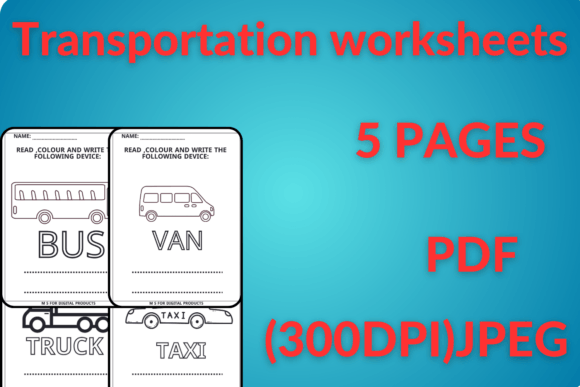
High-quality transportation activity sets usually come in a bundled format for flexibility. A common example is a ZIP file containing both PDF and JPEG files, with each JPEG delivered at 300 DPI for crisp, clear printing. A typical pack includes several themed pages—often around five per set—that combine coloring with early learning tasks. Here is what you can expect to find inside such a resource:
- Coloring pages featuring modern vehicles such as cars, buses, trains, airplanes, ships, and emergency vehicles.
- Tracing and matching activities that help children identify vehicles by shape, size, or function.
- Simple mazes and connect-the-dots that build fine motor skills while reinforcing vehicle names.
- Labeling exercises where kids match words like “wheel,” “wing,” or “horn” to parts of a vehicle.
- Counting and sorting tasks that introduce numbers through vehicle-themed scenes.
Because the files are offered in both PDF and JPEG formats, they can be printed at home, used on a tablet with a drawing app, or incorporated into classroom stations. The high resolution ensures that even detailed illustrations—like the spokes of a bicycle wheel or the windows of a school bus—remain clear and inviting for little hands.
How Transportation Worksheets Boost Cognitive Skills
At first glance, a coloring page of a fire truck might seem like simple fun. But beneath the surface, these worksheets target several key areas of early childhood development:
1. Visual Discrimination and Categorization
When children color a police car differently from a delivery van, they begin to notice subtle differences in shape, color, and markings. Worksheets that ask them to “circle all the vehicles that fly” or “color only the vehicles that go on water” teach categorization—a critical thinking skill that supports math and science learning later on. By sorting vehicles into groups (land, air, water), children learn to apply rules and recognize patterns in their environment.
2. Fine Motor Control and Hand-Eye Coordination
Staying inside the lines of a school bus or tracing a dotted line from a car to its parking spot requires controlled hand movements. These fine motor exercises strengthen the small muscles in the fingers and wrists, which are essential for writing, buttoning clothes, and using scissors. The act of holding a crayon or pencil and guiding it precisely builds the neural pathways needed for later academic tasks.
3. Vocabulary Expansion and Language Skills
Every vehicle introduced on a worksheet becomes a new word in a child’s vocabulary. Terms like ambulance, excavator, helicopter, and submarine might be unfamiliar at first, but repeated exposure through coloring and labeling helps them stick. Parents and teachers can reinforce this by saying the names aloud, asking questions (“What sound does a train make?”), and encouraging children to describe what they see. This language-rich interaction boosts comprehension and communication skills.
4. Focus and Task Completion
A single worksheet page asks a child to follow a sequence—choose a color, stay within boundaries, complete the picture. This structured activity teaches concentration and the satisfaction of finishing a task. Over time, children who regularly work with transportation worksheets develop longer attention spans and greater persistence, which are invaluable in a classroom setting.
Letting Kids Learn About Their Surroundings Through Vehicles
One of the greatest strengths of transportation-themed worksheets is how they bridge the gap between paper learning and real-world experience. A child who has colored a picture of a garbage truck will notice the real truck on pickup day and feel a sense of recognition and pride. They might point and say, “That’s a garbage truck! It collects our trash!”
This connection is especially powerful for modern vehicles that children encounter regularly: ride-sharing cars, electric scooters, delivery drones, and city buses. By including both classic and contemporary vehicles in worksheets, educators can help children understand the evolving world of transportation. Discussions can then expand into simple concepts like “electric cars don’t need gasoline” or “a school bus takes children to school safely.” These conversations lay the groundwork for environmental awareness and community knowledge.
For children living in urban areas, worksheets might feature subway trains and taxis. For those in rural settings, tractors and pickup trucks may be more familiar. The best worksheet packs offer a variety so that every child finds vehicles they recognize—and a few they dream about riding someday.
Practical Tips for Parents and Teachers
To get the most out of transportation worksheets and coloring pages, consider these simple strategies:
- Start with what they know. Begin with vehicles your child sees regularly—family car, school bus, bicycle—then gradually introduce less common ones like a fire engine or sailboat.
- Talk while they color. Ask open-ended questions: “Where do you think this train is going?” “What color should the ambulance be?” This turns a quiet activity into a conversation.
- Combine with real-life outings. After coloring a page about airplanes, visit an airport viewing area or watch planes overhead. The worksheet becomes a preview for a real adventure.
- Use the JPEG files for digital fun. If you prefer screen-free time, print at 300 DPI for beautiful results. On a tablet, open the JPEG in a drawing app so kids can color digitally—great for travel or waiting rooms.
- Encourage storytelling. Once a page is colored, ask your child to create a story about the vehicle. “This little car is driving to the grocery store. Who is inside?” This builds narrative skills and imagination.
- Repeat and review. Children learn through repetition. Revisit the same worksheets after a few weeks and notice how their coloring, labeling, and talking have improved.
Common Misunderstandings About Kids’ Worksheets
Some adults worry that worksheets are too passive or that they stifle creativity. However, when used correctly, transportation worksheets are anything but limiting. They provide a structured starting point that actually boosts confidence, especially for children who feel overwhelmed by a blank page. The vehicle outlines give them a clear task, and within that structure, they can choose colors, add details (like clouds or roads), and invent stories. The key is balance: use worksheets as one tool among many, alongside building blocks, outdoor play, and dramatic play with toy vehicles.
Another concern is that worksheets might be too advanced for toddlers or too simple for preschoolers. High-quality packs solve this by offering a range of difficulty levels—from simple coloring for two-year-olds to tracing and matching for four- and five-year-olds. Parents can select pages that match their child’s current abilities and gradually move to harder tasks. Differentiation is built into the design, making the same pack useful across multiple ages.
Why Your Review Matters
When you download and use a transportation worksheet pack, your feedback helps creators improve. Your review is important to refine the illustrations, adjust difficulty levels, and add new vehicle types that children love. Whether you noticed that the train had too many wheels for a toddler to count or that the police car was a huge hit, sharing your experience ensures that future editions are even better. Honest reviews also guide other parents and teachers who are searching for high-quality resources. So after your little one finishes coloring that shiny red fire truck, take a moment to leave a few thoughts—it makes a real difference in the quality of educational materials available to everyone.
Bringing It All Together: A Fun Path to Learning
Transportation worksheets and coloring pages are more than a quiet-time activity. They are a gateway to cognitive skill development, vocabulary growth, and a deeper understanding of the world outside a child’s window. By combining the joy of coloring with the logic of categorization, fine motor practice, and real-world connection, these resources offer a well-rounded learning experience for little kids. Whether you are a parent looking for rainy-day fun, a teacher planning a transportation unit, or a caregiver seeking screen-free engagement, a high-quality set of worksheets—delivered in convenient PDF and JPEG formats at 300 DPI—can become a trusted tool in your educational toolkit. Let your little ones explore, color, and learn about the modern vehicles that surround them every day. Their curiosity will thank you.
Note: This article contains general information about transportation worksheets and their educational benefits. Always choose age-appropriate materials and supervise young children during coloring and tracing activities.