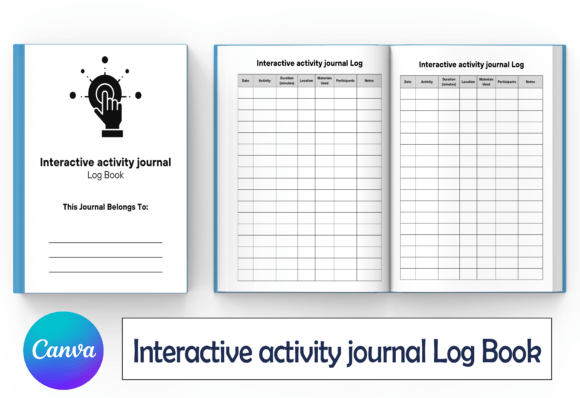
Interactive Activity Journal Log Book: A Strategic Tool for Purposeful Planning and Creative Work
Many professionals and creators treat journals and log books as afterthoughts. They pick up a generic notebook, jot down whatever comes to mind, and hope the act of writing somehow leads to clarity. But there is a more intentional way to approach guided documentation. An Interactive Activity Journal Log Book is not simply a place to record events. It is a structured framework designed to support reflection, planning, decision-making, and consistent follow-through. Whether you are a freelancer managing multiple projects, an educator tracking student progress, a small business owner refining customer experience, or a publisher building a low-content KDP catalog, understanding how to use this tool strategically can change how you approach both daily work and long-term goals.
This article explores what an Interactive Activity Journal Log Book is, why it may be useful across different contexts, how to plan your approach, and what to consider before relying on it as part of your workflow or product offering.
What an Interactive Activity Journal Log Book Actually Offers
At its core, an Interactive Activity Journal Log Book is a guided record-keeping system. Unlike a blank notebook where you start from zero each time, this format provides prompts, sections, and structured spaces that encourage specific types of thinking. The interactive element means that you are not just passively writing. You are prompted to respond, reflect, compare, plan, or evaluate. This shift from passive logging to active engagement can make a meaningful difference in how you process information and make decisions.
For creators and publishers working within the Amazon KDP ecosystem, this template offers an immediate advantage. The Interactive Activity Journal Log Book KDP Canva Template comes as a fully editable source file, with 100 pages of structured interior content, a trim size of 8.5 by 11 inches, and print-ready PDF formats that require no additional formatting. You can customize the prompts, headings, and layout to fit your specific audience or use case. The fact that it includes both bleed and no-bleed options means you have flexibility depending on your printing preferences. For anyone building a low-content publishing business, this removes the most time-consuming part of the process. You are not designing from scratch. You are adapting a proven structure.
But the strategic value goes beyond convenience. The real question is whether this type of tool serves a genuine need for your customers, your team, or yourself.
Why Thoughtful Use of an Interactive Activity Journal Log Book Supports Better Outcomes
Many productivity and planning failures do not happen because people lack motivation. They happen because people lack structure. When you have a system that asks specific questions at specific times, you are less likely to skip important steps. An Interactive Activity Journal Log Book can support several key areas of professional and creative work.
Goal Clarity and Tracking
Writing down goals is a well-documented strategy for increasing follow-through. But what matters more is how you write them and how you revisit them. An interactive log book can guide you to define goals with more precision, break them into smaller steps, and review progress at regular intervals. Instead of a vague list of aspirations, you end up with a documented path that includes obstacles, adjustments, and evidence of what worked. For entrepreneurs and small business owners, this kind of structured tracking can directly influence quarterly planning and resource allocation.
Productivity and Focus
When your day is filled with competing priorities, a log book that prompts you to identify the most important tasks, reflect on distractions, and plan your energy use can help you stay on track. The interactive nature means you are not just recording what you did. You are also noting what interrupted you, how you responded, and what you might try differently tomorrow. Over time, this builds a personal dataset about your work patterns. You begin to see which environments, times of day, or task types lead to your best output.
Creativity and Idea Development
Creative professionals often struggle with capturing ideas in a way that allows them to develop later. An Interactive Activity Journal Log Book can include prompts for brainstorming, observation, and experimentation. By creating a space where you regularly capture and revisit ideas, you reduce the risk of losing valuable concepts. You also create a habit of looking for connections between seemingly unrelated notes. This is how many successful creative projects begin.
Branding and Customer Experience
For publishers and content creators, the log book itself can become part of your brand identity. When you use a well-designed template, you signal to your audience that you value structure and thoughtfulness. If you are selling these log books on KDP, the interactive format can differentiate your product from generic journals. Customers who are looking for more than a blank page will recognize the added value immediately. This can improve reviews, reduce returns, and increase customer loyalty over time.
When to Use an Interactive Activity Journal Log Book
There is no single right time to start using this tool. But there are specific situations where it provides the most leverage.
- When you are starting a new project or phase. Whether it is launching a product, beginning a course, or entering a new market, using a structured log book from the start helps you capture observations and decisions that you might otherwise forget.
- When you need to diagnose a recurring problem. If you keep encountering the same obstacles, a log book that prompts you to document causes, attempted solutions, and outcomes can reveal patterns you cannot see in the moment.
- When you are building a content library for passive income. For KDP publishers, adding interactive interiors to your catalog expands your addressable audience. Many buyers search specifically for structured journals and log books, not blank notebooks.
- When you are mentoring or managing others. Educators, coaches, and team leaders can use an interactive log book to track progress, identify skill gaps, and guide conversations during reviews or check-ins.
Choosing the right moment to begin using this tool depends on your current context. The key is to start with a clear purpose, not just curiosity.
How to Approach the Interactive Activity Journal Log Book Intentionally
Using a structured log book without a plan can still produce some benefits, but you will get far more value if you take a few deliberate steps before you begin.
Define Your Primary Outcome
Before you write the first entry, ask yourself what you want this log book to help you achieve. Is it better time management? More consistent creative output? Clearer documentation for a specific project? Your answer will determine which prompts you emphasize and how often you review past entries. If you are using the template as a product, define the outcome your customer will experience. This guides your customization decisions.
Set a Realistic Rhythm
One common mistake is to commit to daily entries without considering whether that frequency is sustainable. A more effective approach is to choose a rhythm that fits your natural workflow. Some people benefit from daily reflection. Others do better with weekly or event-based entries. An interactive log book is flexible enough to support any frequency, as long as you are consistent within your chosen pattern.
Use the Prompts as Starting Points, Not Rules
The prompts in an Interactive Activity Journal Log Book are designed to stimulate thinking, not to restrict it. Feel free to adapt, combine, or skip prompts as needed. The goal is to capture useful information, not to fill every space. Over time, you will develop a personalized version of the log book that works specifically for you or your audience.
Plan Regular Reviews
The real power of a log book emerges when you revisit past entries. Schedule time every few weeks to scan what you have written. Look for themes, recurring challenges, and unexpected wins. This review habit turns the log book from a record into a decision-making tool. Without review, you are just collecting data. With review, you are building insight.
Practical Examples of Strategic Use
Consider a freelancer who juggles multiple clients. Using an Interactive Activity Journal Log Book, they can track which types of projects energize them, which clients communicate clearly, and where they tend to underestimate time. After a few months of consistent logging, they have concrete evidence to guide their pricing, client selection, and schedule design. This is not guesswork. It is documented experience.
Now consider a KDP publisher who creates a series of Interactive Activity Journal Log Books for different niches. One version might focus on fitness tracking with prompts for nutrition and exercise. Another might target entrepreneurs with prompts for business metrics and reflection. Each version adapts the same basic template to a specific audience. This approach allows the publisher to scale their product line without starting from zero each time. The 100 editable source files and print-ready PDFs make this workflow efficient and repeatable.
For educators, an interactive log book can serve as a structured portfolio tool. Students can use it to document their learning process, reflect on challenges, and set goals for improvement. The teacher gains visibility into each student's thinking, which informs instruction and feedback. This transforms the log book from a simple record into a pedagogical asset.
What to Consider Before Relying on an Interactive Activity Journal Log Book
No tool is universally beneficial. There are situations where an Interactive Activity Journal Log Book might not serve your goals, or where using it without care could lead to frustration.
If you do not have a clear reason for using it, you may find yourself filling in prompts mechanically without gaining any real insight. This is the risk of any structured tool. The structure can become a substitute for thinking rather than a support for it. To avoid this, always tie your log book use to a specific question or goal.
Another risk is overcomplication. Some interactive log books include many different prompt types, which can feel overwhelming if you are new to structured journaling. Start with the sections that are most relevant to your current priority. You can expand to other sections later as you become more comfortable with the rhythm.
For KDP publishers, a key consideration is differentiation. The market for low-content books is competitive. Simply uploading a generic interactive template is unlikely to generate strong sales unless you invest in a clear niche, compelling cover design, and accurate keywords. The template gives you a strong foundation, but your strategic choices determine whether it succeeds as a product.
Finally, be aware that digital tools and apps can sometimes serve similar functions. If you or your customers prefer typing over handwriting, a digital note-taking system might be a better fit. The tactile experience of a physical log book is a benefit for some, but a drawback for others. Knowing your audience helps you decide which format to use.
Long-Term Value: Building a Practice, Not Just a Product
The most valuable aspect of an Interactive Activity Journal Log Book is not the template itself. It is the habit it enables. When you use it intentionally, you build a practice of regular reflection, structured planning, and evidence-based adjustment. Over months and years, this practice compounds. You make fewer repeated mistakes. You recognize opportunities earlier. You communicate your progress more clearly to stakeholders, customers, or collaborators.
For KDP publishers, the long-term value lies in building a brand around structured, high-quality interiors. Customers who buy one interactive log book and find it useful are likely to look for others from the same publisher. By consistently offering well-designed, editable Canva templates with professional formatting, you establish trust and increase lifetime customer value. The fact that new products are added every few days means your catalog can grow steadily without requiring you to reinvent the format each time.
The Interactive Activity Journal Log Book KDP Canva Template is designed to be both a practical tool for individual use and a scalable product for commercial publishing. Its 120 print-ready pages, high-resolution interior, and flexible bleed settings make it suitable for a wide range of applications. Whether you are using it for your own planning or adapting it for your customers, the key is to approach it with intention.
Think of it as a system for better decisions, not just a place to write things down. When you use it that way, the results go far beyond what any single entry can capture.